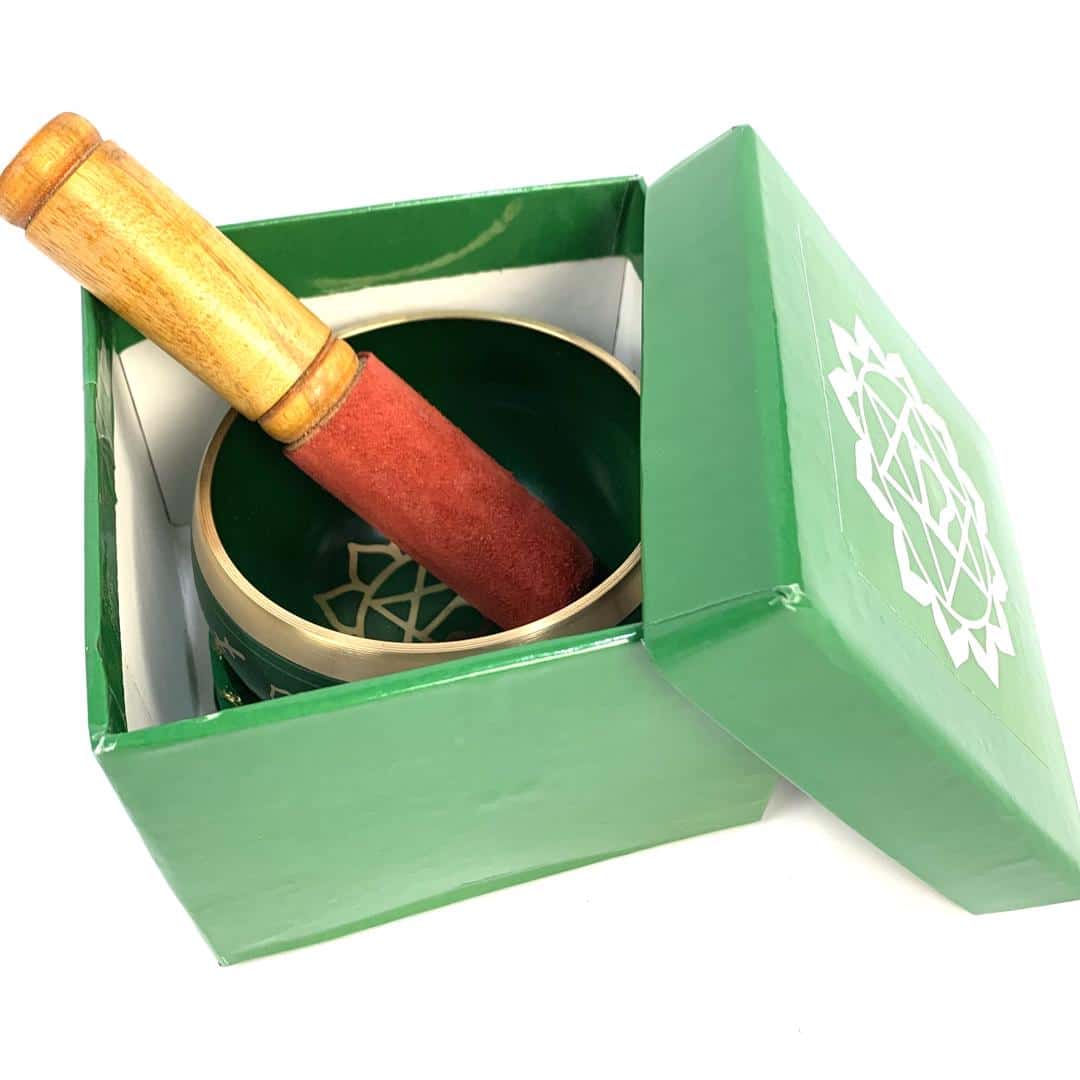
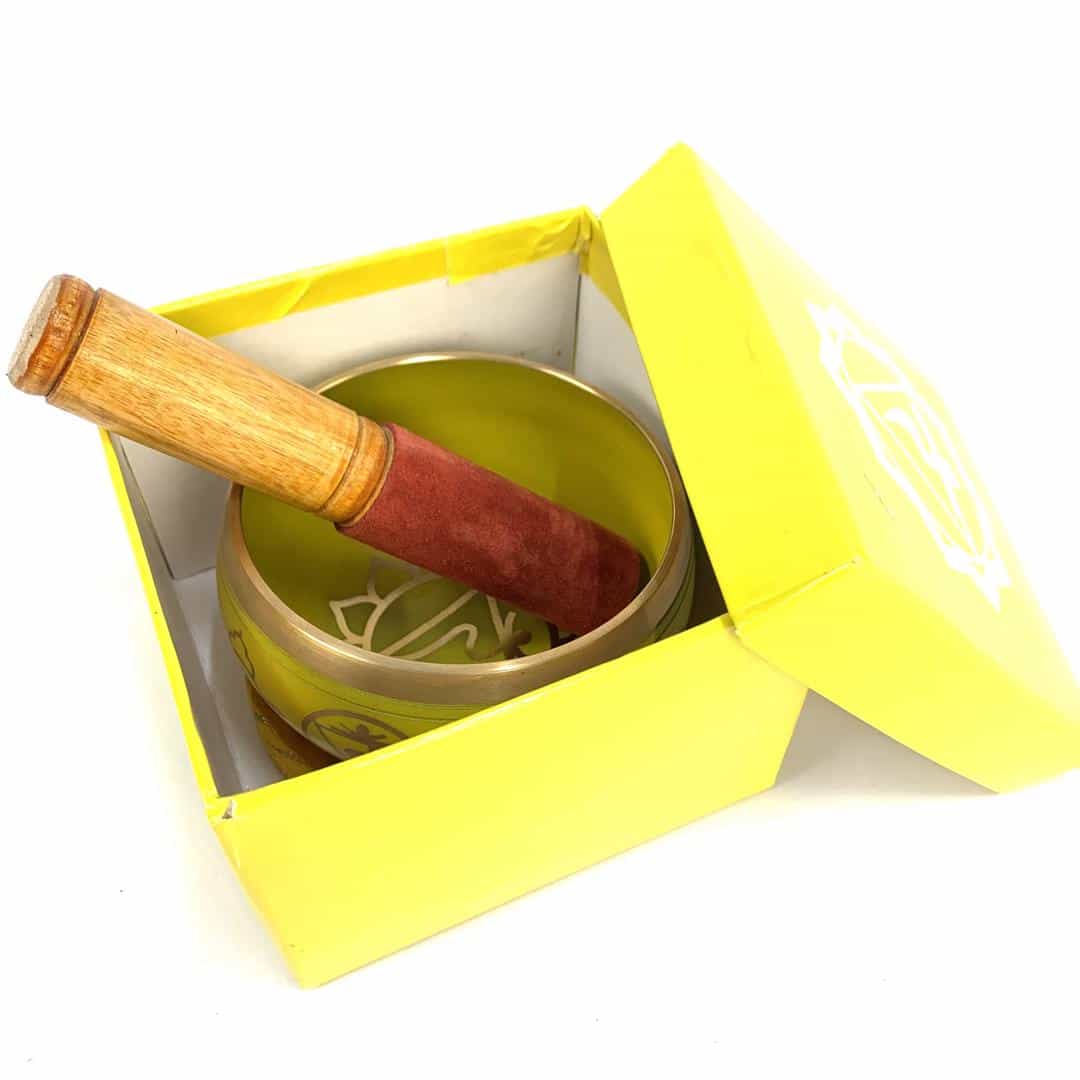
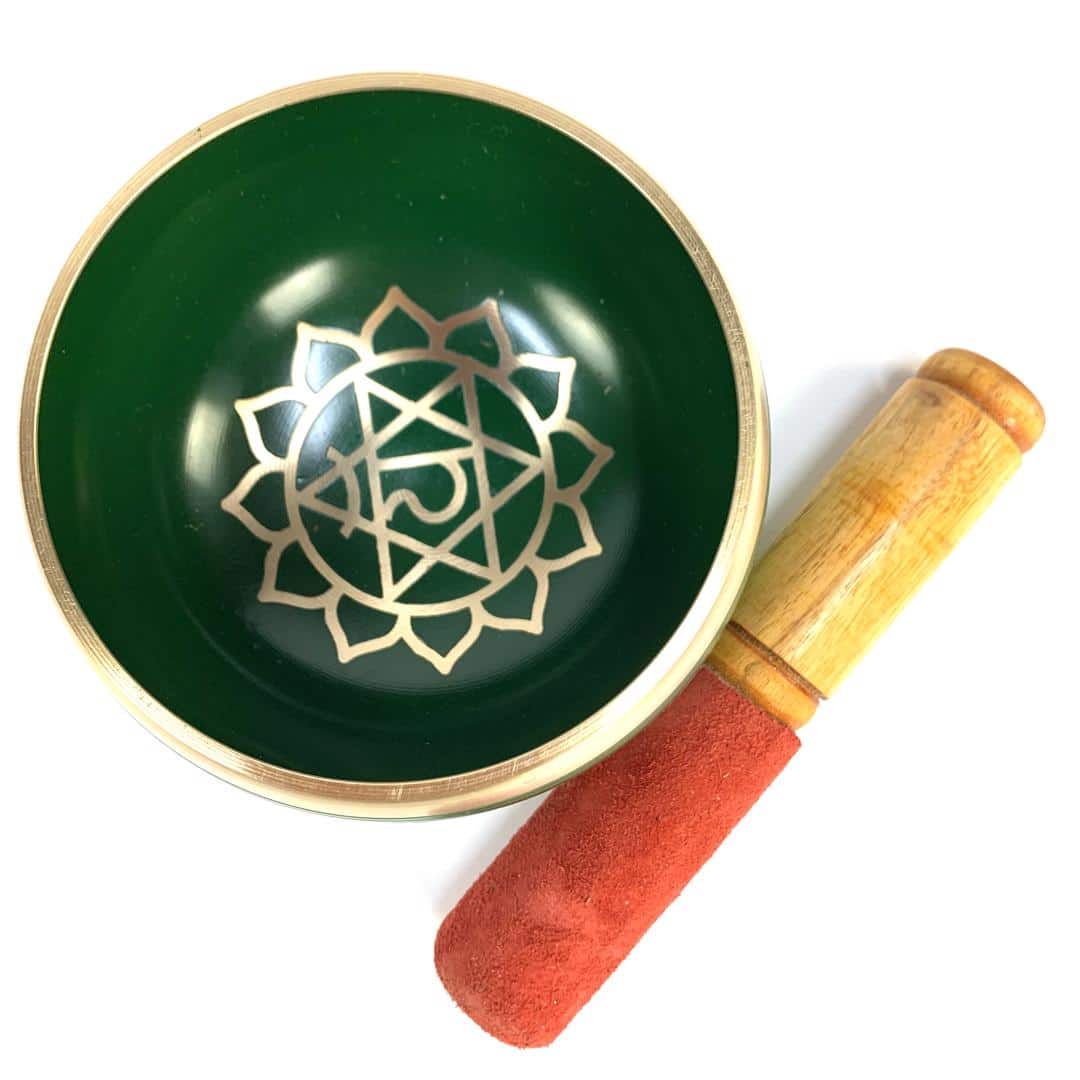
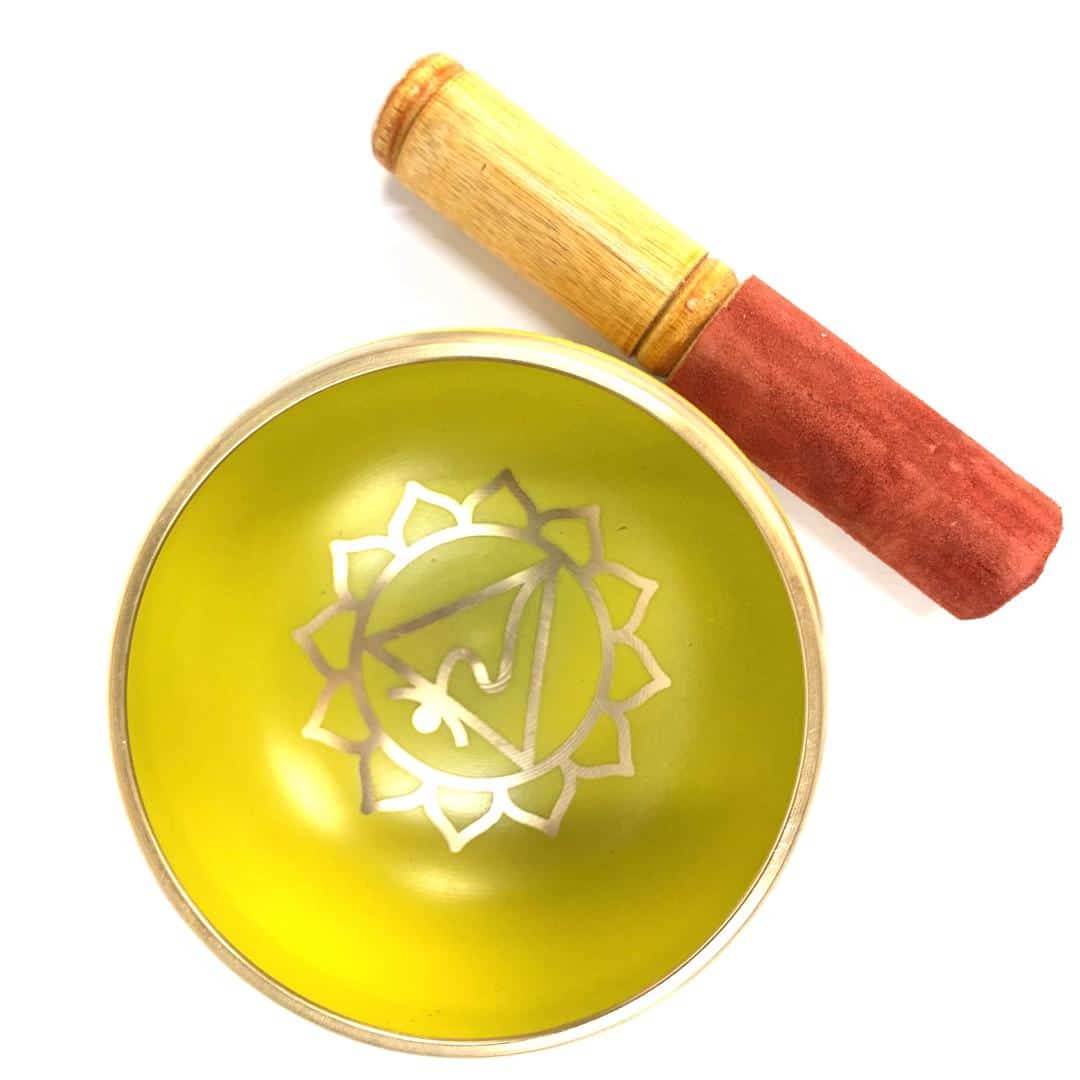
Tibetan Singing Bowl 10cm, Brass Chakra With Matching Cushion & Striker; Green Or Yellow Available
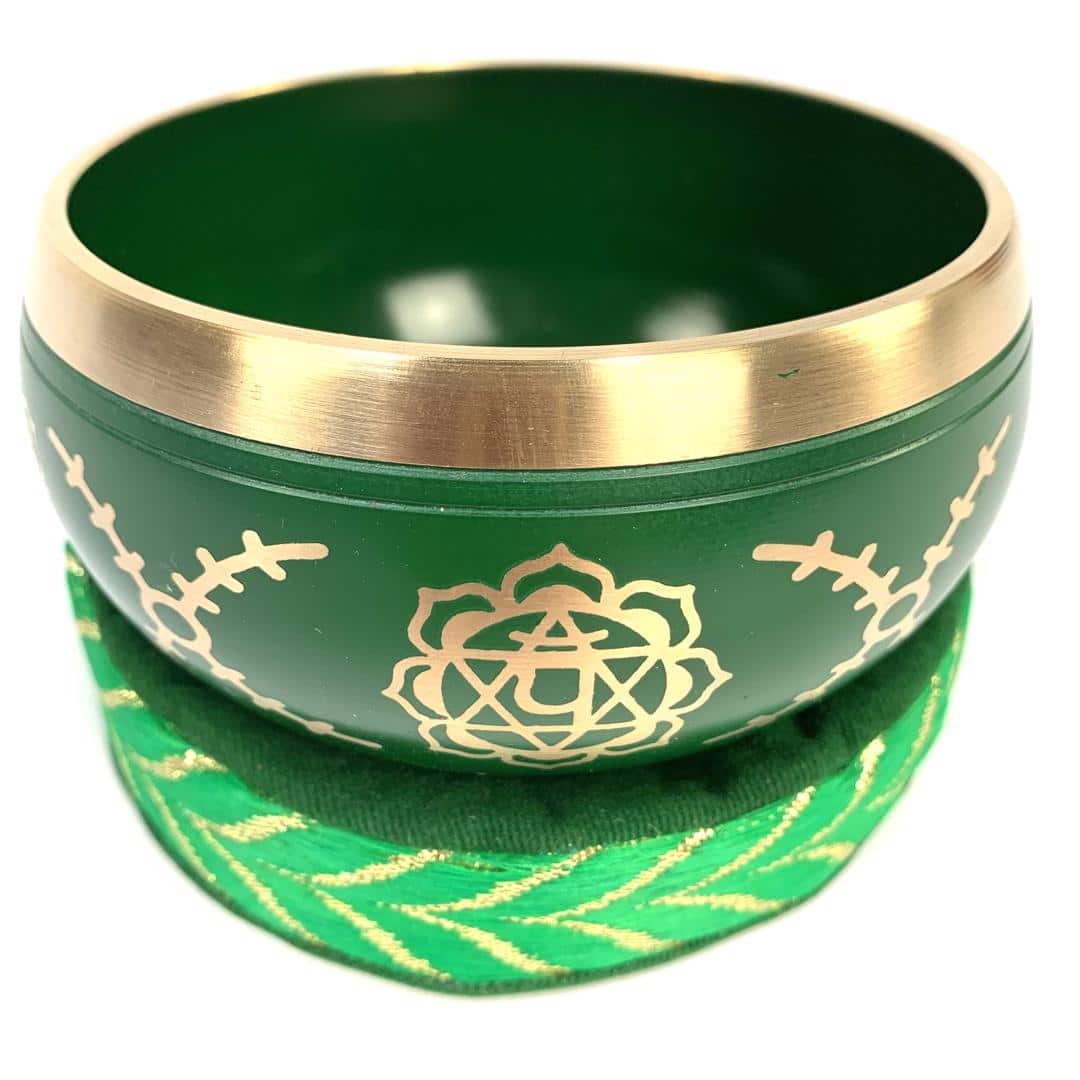
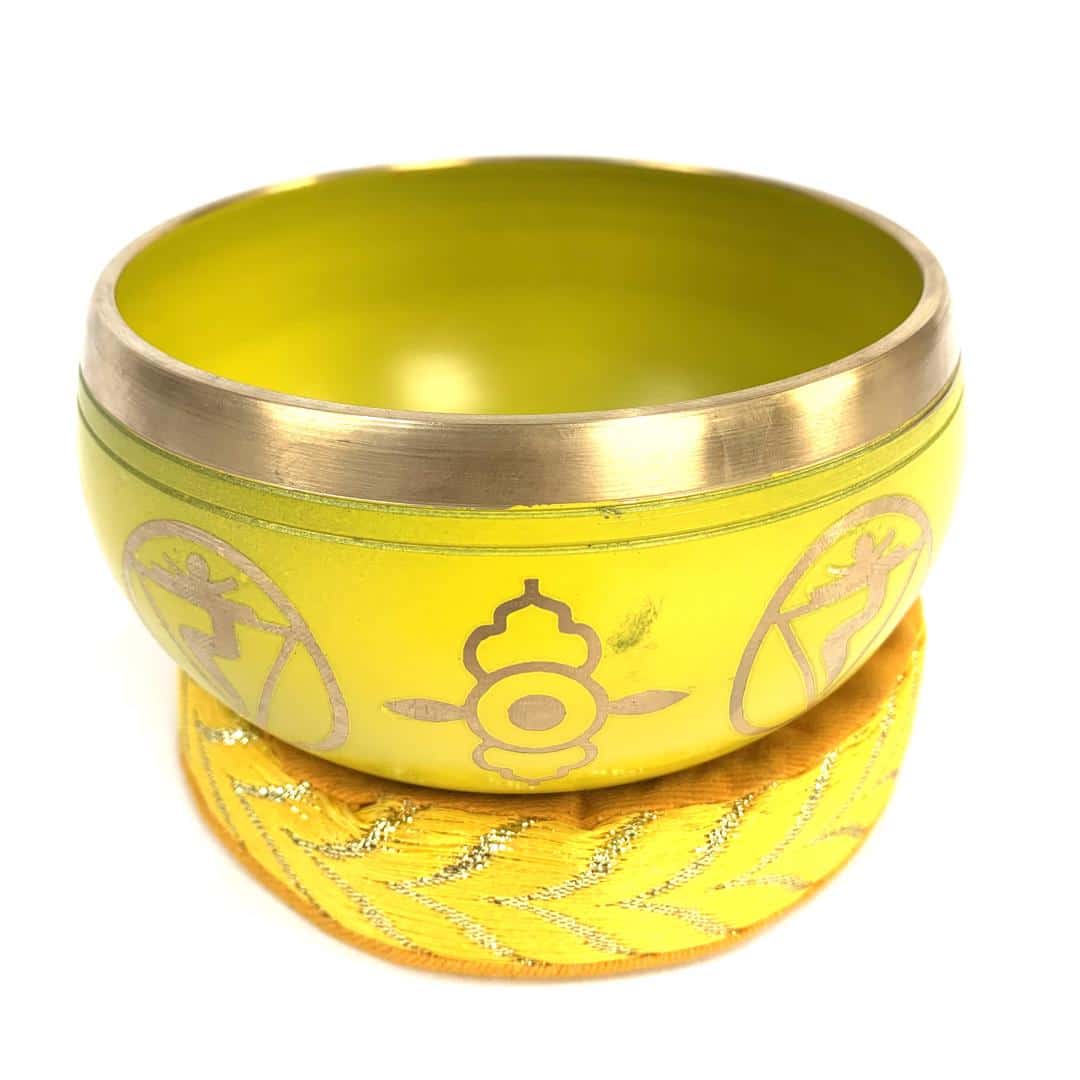
Tibetan Singing Bowl 10cm, Brass Chakra With Matching Cushion & Striker; Green Or Yellow Available
known as ‘7 Chakras bowls’, they are made in India from a metallic composition of nickle, tin, copper, cadmium, lead, zinc, iron, and bismuth.
What is it?
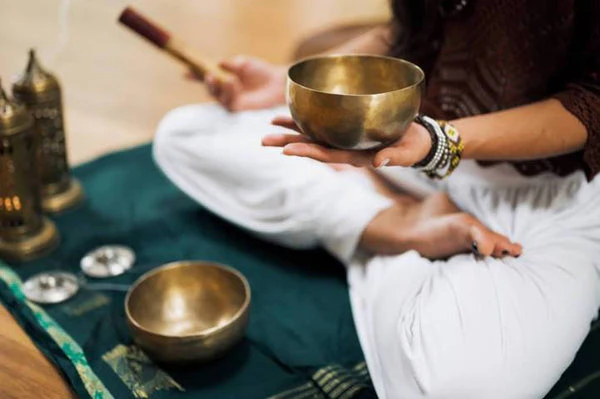
A Tibetan singing bowl is a type of bowl that vibrates and produces a rich, deep tone when played. Also known as singing bowls or Himalayan bowls, Tibetan singing bowls are said to promote relaxation and offer powerful healing properties.
Buddhist monks have long used Tibetan singing bowls in meditation practice. In addition, some wellness practitioners (including music therapists, massage therapists, and yoga therapists) use Tibetan singing bowls during treatment.
History of Singing Bowls
There is debate about the exact origins of the Tibetan singing bowl, although there is some evidence that it may have originated in China sometime around the 16th century BC. Traditional bowls were made of a variety of metals including mercury, lead, silver, iron, gold, and copper.
During the 1970s, people began importing the bowls to North America and Europe. They grew in popularity in the 1990s as a complementary and alternative treatment for a variety of ailments.
Uses for Singing Bowls
-
Stress relief - Some research supports the use of singing bowls as a way to promote relaxation and reduce feelings of anxiety.1
-
Improving sleep - Because singing bowl therapy has been linked to decreased anxiety and tension, it may be helpful for improving sleep. Further research is needed to support this.
-
Lowering blood pressure - A preliminary study published in the American Journal of Health Promotion in 2014 examined the benefits of starting a directed relaxation session with 12 minutes of singing bowl sounds. It found a greater reduction in systolic blood pressureand heart rate compared to silence before the session.
-
Reducing depression - One study linked singing bowl therapy to improvements in mood and suggested that this approach may be a low-cost way to help reduce symptoms of depression.
-
Stimulating the immune system - Some also claim that singing bowls can stimulate the immune system and produce beneficial changes in brain waves.
-
Pain relief - One study looking at chronic spinal pain found that people treated with singing bowl therapy experienced significantly decreased pain intensity as well as decreased stress.
-
Balancing and harmonizing the body: Many proponents claim that the vibrations of a singing bowl can produce beneficial changes in the body by "harmonizing" the cells and "balancing the body's energy system."
-
Enhancing other healing practices: Some people use the bowls in combination with other healing practices, such as meditation and deep breathing.
How to Use Singing Bowls
During singing bowl treatment, you will lie on the floor while the bowls are placed in different configurations. For example, they might be placed around your body, on your body, or in different locations around the room.
Once positioned, the practitioner will use mallets to strike the bowls in a sequence in order to produce sounds and vibrations. In some cases, your practitioner may also include a guided meditation.
To use a singing bowl yourself, firmly press the accompanying mallet in a circular motion against the bowl's outside edge or rim. When you hear a bright, clear tone, you can slow down the motion. Use your full arm to make the motion, rather than just rotating your wrist. You can also make the same circular motion against the outside belly of the bowl. Additionally, you can gently strike the bowl before beginning the circular motion.
Original: $159.99
-65%$159.99
$56.00More Images
Tibetan Singing Bowl 10cm, Brass Chakra With Matching Cushion & Striker; Green Or Yellow Available
known as ‘7 Chakras bowls’, they are made in India from a metallic composition of nickle, tin, copper, cadmium, lead, zinc, iron, and bismuth.
What is it?
A Tibetan singing bowl is a type of bowl that vibrates and produces a rich, deep tone when played. Also known as singing bowls or Himalayan bowls, Tibetan singing bowls are said to promote relaxation and offer powerful healing properties.
Buddhist monks have long used Tibetan singing bowls in meditation practice. In addition, some wellness practitioners (including music therapists, massage therapists, and yoga therapists) use Tibetan singing bowls during treatment.
History of Singing Bowls
There is debate about the exact origins of the Tibetan singing bowl, although there is some evidence that it may have originated in China sometime around the 16th century BC. Traditional bowls were made of a variety of metals including mercury, lead, silver, iron, gold, and copper.
During the 1970s, people began importing the bowls to North America and Europe. They grew in popularity in the 1990s as a complementary and alternative treatment for a variety of ailments.
Uses for Singing Bowls
-
Stress relief - Some research supports the use of singing bowls as a way to promote relaxation and reduce feelings of anxiety.1
-
Improving sleep - Because singing bowl therapy has been linked to decreased anxiety and tension, it may be helpful for improving sleep. Further research is needed to support this.
-
Lowering blood pressure - A preliminary study published in the American Journal of Health Promotion in 2014 examined the benefits of starting a directed relaxation session with 12 minutes of singing bowl sounds. It found a greater reduction in systolic blood pressureand heart rate compared to silence before the session.
-
Reducing depression - One study linked singing bowl therapy to improvements in mood and suggested that this approach may be a low-cost way to help reduce symptoms of depression.
-
Stimulating the immune system - Some also claim that singing bowls can stimulate the immune system and produce beneficial changes in brain waves.
-
Pain relief - One study looking at chronic spinal pain found that people treated with singing bowl therapy experienced significantly decreased pain intensity as well as decreased stress.
-
Balancing and harmonizing the body: Many proponents claim that the vibrations of a singing bowl can produce beneficial changes in the body by "harmonizing" the cells and "balancing the body's energy system."
-
Enhancing other healing practices: Some people use the bowls in combination with other healing practices, such as meditation and deep breathing.
How to Use Singing Bowls
During singing bowl treatment, you will lie on the floor while the bowls are placed in different configurations. For example, they might be placed around your body, on your body, or in different locations around the room.
Once positioned, the practitioner will use mallets to strike the bowls in a sequence in order to produce sounds and vibrations. In some cases, your practitioner may also include a guided meditation.
To use a singing bowl yourself, firmly press the accompanying mallet in a circular motion against the bowl's outside edge or rim. When you hear a bright, clear tone, you can slow down the motion. Use your full arm to make the motion, rather than just rotating your wrist. You can also make the same circular motion against the outside belly of the bowl. Additionally, you can gently strike the bowl before beginning the circular motion.
Product Information
Product Information
Shipping & Returns
Shipping & Returns
Description
known as ‘7 Chakras bowls’, they are made in India from a metallic composition of nickle, tin, copper, cadmium, lead, zinc, iron, and bismuth.
What is it?
A Tibetan singing bowl is a type of bowl that vibrates and produces a rich, deep tone when played. Also known as singing bowls or Himalayan bowls, Tibetan singing bowls are said to promote relaxation and offer powerful healing properties.
Buddhist monks have long used Tibetan singing bowls in meditation practice. In addition, some wellness practitioners (including music therapists, massage therapists, and yoga therapists) use Tibetan singing bowls during treatment.
History of Singing Bowls
There is debate about the exact origins of the Tibetan singing bowl, although there is some evidence that it may have originated in China sometime around the 16th century BC. Traditional bowls were made of a variety of metals including mercury, lead, silver, iron, gold, and copper.
During the 1970s, people began importing the bowls to North America and Europe. They grew in popularity in the 1990s as a complementary and alternative treatment for a variety of ailments.
Uses for Singing Bowls
-
Stress relief - Some research supports the use of singing bowls as a way to promote relaxation and reduce feelings of anxiety.1
-
Improving sleep - Because singing bowl therapy has been linked to decreased anxiety and tension, it may be helpful for improving sleep. Further research is needed to support this.
-
Lowering blood pressure - A preliminary study published in the American Journal of Health Promotion in 2014 examined the benefits of starting a directed relaxation session with 12 minutes of singing bowl sounds. It found a greater reduction in systolic blood pressureand heart rate compared to silence before the session.
-
Reducing depression - One study linked singing bowl therapy to improvements in mood and suggested that this approach may be a low-cost way to help reduce symptoms of depression.
-
Stimulating the immune system - Some also claim that singing bowls can stimulate the immune system and produce beneficial changes in brain waves.
-
Pain relief - One study looking at chronic spinal pain found that people treated with singing bowl therapy experienced significantly decreased pain intensity as well as decreased stress.
-
Balancing and harmonizing the body: Many proponents claim that the vibrations of a singing bowl can produce beneficial changes in the body by "harmonizing" the cells and "balancing the body's energy system."
-
Enhancing other healing practices: Some people use the bowls in combination with other healing practices, such as meditation and deep breathing.
How to Use Singing Bowls
During singing bowl treatment, you will lie on the floor while the bowls are placed in different configurations. For example, they might be placed around your body, on your body, or in different locations around the room.
Once positioned, the practitioner will use mallets to strike the bowls in a sequence in order to produce sounds and vibrations. In some cases, your practitioner may also include a guided meditation.
To use a singing bowl yourself, firmly press the accompanying mallet in a circular motion against the bowl's outside edge or rim. When you hear a bright, clear tone, you can slow down the motion. Use your full arm to make the motion, rather than just rotating your wrist. You can also make the same circular motion against the outside belly of the bowl. Additionally, you can gently strike the bowl before beginning the circular motion.