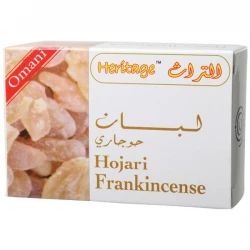
Omani Pure Hojari Frankincense Resin 125g, Product Of Oman
Silver and Hojari are generally considered the highest grades of resin. Quality is based on colour, purity, aroma, age, and shape.
Hojari Frankincense, also known as Boswellia Sacra, is considered one of the finest and most sought-after types of frankincense resin. It is harvested from the Boswellia sacra tree, which grows predominantly in the Dhofar region of Oman, as well as in parts of Yemen and Somalia.
Here are some key characteristics and facts about Hojari Frankincense:
-
High Quality: Hojari Frankincense is prized for its exceptional quality and purity. It is often considered superior to other varieties of frankincense due to its rich aroma, clarity, and distinctiveness.
-
Harvesting Process: The resin is harvested by making small cuts or incisions in the bark of the Boswellia sacra tree. This process allows the resin to ooze out and form tear-shaped droplets, which are then carefully collected by local harvesters.
-
Aromatic Profile: Hojari Frankincense is renowned for its complex and fragrant aroma. It has a fresh, citrusy top note with hints of pine and woody undertones. When burned, it produces a sweet, resinous scent that is often used for meditation, spiritual rituals, and aromatherapy.
-
Traditional and Cultural Uses: Frankincense has a long history of use in various cultures and civilizations, dating back thousands of years. It has been valued for its medicinal, aromatic, and ceremonial properties. In ancient times, frankincense was often burned as incense in religious ceremonies, offerings, and purification rituals.
-
Medicinal and Therapeutic Properties: In addition to its ceremonial uses, frankincense has been used in traditional medicine systems for its purported health benefits. It is believed to have anti-inflammatory, analgesic, and antimicrobial properties. Frankincense resin has been used to treat a range of ailments, including respiratory issues, arthritis, and skin conditions.
-
Modern Applications: Today, Hojari Frankincense is still highly prized and widely used in aromatherapy, perfumery, and skincare products. It is also used in natural health remedies and supplements.
-
Sustainable Harvesting: Due to its high demand and limited geographic distribution, efforts have been made to ensure the sustainable harvesting of Boswellia sacra trees. Sustainable harvesting practices aim to protect the long-term viability of the trees and support the livelihoods of local communities involved in resin collection.
Overall, Hojari Frankincense is esteemed for its exceptional quality, aromatic properties, and rich cultural heritage, making it a valuable natural resource with a wide range of traditional and modern applications.
How To Burn Resin
Burning resin, is a common practice for various purposes, including aromatherapy, spiritual rituals, and ceremonies. Here's a general guide on how to burn resin:
-
Choose a Suitable Container: Select a heat-resistant container to burn the resin. Traditionally, brass or copper incense burners are used, but you can also use ceramic or glass bowls or dishes.
-
Prepare the Container: If you're using a bowl or dish, fill it with a layer of sand or ash to insulate the container and dissipate heat. This helps prevent the container from overheating and protects the surface it's placed on.
-
Light a Charcoal Tablet: Most commonly, resin is burned on a charcoal tablet specifically made for burning incense resins. Use tongs to hold the charcoal tablet and light one edge with a lighter or match. The charcoal will begin to spark and crackle as it ignites.
-
Place the Charcoal in the Container: Once the charcoal tablet is lit and starts to glow red-hot, carefully place it in the center of the container on top of the sand or ash layer. Be cautious as the charcoal will emit heat.
-
Add the Resin: Once the charcoal tablet is glowing evenly, use a small spoon or tongs to sprinkle a small amount of resin onto the charcoal. Start with a small amount, as resin can produce a strong scent when burned.
-
Allow it to Burn: As the resin heats up on the charcoal, it will start to release its aromatic smoke. Allow the resin to burn and fill the space with its fragrance. You can add more resin as needed to maintain the desired level of scent.
-
Safety Precautions: Always exercise caution when burning resin. Keep the burning container away from flammable materials, and never leave it unattended. Ensure good ventilation in the room to avoid inhaling excessive smoke.
-
Extinguish Safely: Once you're finished with the burning session, allow the charcoal tablet to burn out completely and cool down before disposing of it. You can extinguish it by placing it in a container of sand or water.
Omani Pure Hojari Frankincense Resin 125g, Product Of Oman
Silver and Hojari are generally considered the highest grades of resin. Quality is based on colour, purity, aroma, age, and shape.
Hojari Frankincense, also known as Boswellia Sacra, is considered one of the finest and most sought-after types of frankincense resin. It is harvested from the Boswellia sacra tree, which grows predominantly in the Dhofar region of Oman, as well as in parts of Yemen and Somalia.
Here are some key characteristics and facts about Hojari Frankincense:
-
High Quality: Hojari Frankincense is prized for its exceptional quality and purity. It is often considered superior to other varieties of frankincense due to its rich aroma, clarity, and distinctiveness.
-
Harvesting Process: The resin is harvested by making small cuts or incisions in the bark of the Boswellia sacra tree. This process allows the resin to ooze out and form tear-shaped droplets, which are then carefully collected by local harvesters.
-
Aromatic Profile: Hojari Frankincense is renowned for its complex and fragrant aroma. It has a fresh, citrusy top note with hints of pine and woody undertones. When burned, it produces a sweet, resinous scent that is often used for meditation, spiritual rituals, and aromatherapy.
-
Traditional and Cultural Uses: Frankincense has a long history of use in various cultures and civilizations, dating back thousands of years. It has been valued for its medicinal, aromatic, and ceremonial properties. In ancient times, frankincense was often burned as incense in religious ceremonies, offerings, and purification rituals.
-
Medicinal and Therapeutic Properties: In addition to its ceremonial uses, frankincense has been used in traditional medicine systems for its purported health benefits. It is believed to have anti-inflammatory, analgesic, and antimicrobial properties. Frankincense resin has been used to treat a range of ailments, including respiratory issues, arthritis, and skin conditions.
-
Modern Applications: Today, Hojari Frankincense is still highly prized and widely used in aromatherapy, perfumery, and skincare products. It is also used in natural health remedies and supplements.
-
Sustainable Harvesting: Due to its high demand and limited geographic distribution, efforts have been made to ensure the sustainable harvesting of Boswellia sacra trees. Sustainable harvesting practices aim to protect the long-term viability of the trees and support the livelihoods of local communities involved in resin collection.
Overall, Hojari Frankincense is esteemed for its exceptional quality, aromatic properties, and rich cultural heritage, making it a valuable natural resource with a wide range of traditional and modern applications.
How To Burn Resin
Burning resin, is a common practice for various purposes, including aromatherapy, spiritual rituals, and ceremonies. Here's a general guide on how to burn resin:
-
Choose a Suitable Container: Select a heat-resistant container to burn the resin. Traditionally, brass or copper incense burners are used, but you can also use ceramic or glass bowls or dishes.
-
Prepare the Container: If you're using a bowl or dish, fill it with a layer of sand or ash to insulate the container and dissipate heat. This helps prevent the container from overheating and protects the surface it's placed on.
-
Light a Charcoal Tablet: Most commonly, resin is burned on a charcoal tablet specifically made for burning incense resins. Use tongs to hold the charcoal tablet and light one edge with a lighter or match. The charcoal will begin to spark and crackle as it ignites.
-
Place the Charcoal in the Container: Once the charcoal tablet is lit and starts to glow red-hot, carefully place it in the center of the container on top of the sand or ash layer. Be cautious as the charcoal will emit heat.
-
Add the Resin: Once the charcoal tablet is glowing evenly, use a small spoon or tongs to sprinkle a small amount of resin onto the charcoal. Start with a small amount, as resin can produce a strong scent when burned.
-
Allow it to Burn: As the resin heats up on the charcoal, it will start to release its aromatic smoke. Allow the resin to burn and fill the space with its fragrance. You can add more resin as needed to maintain the desired level of scent.
-
Safety Precautions: Always exercise caution when burning resin. Keep the burning container away from flammable materials, and never leave it unattended. Ensure good ventilation in the room to avoid inhaling excessive smoke.
-
Extinguish Safely: Once you're finished with the burning session, allow the charcoal tablet to burn out completely and cool down before disposing of it. You can extinguish it by placing it in a container of sand or water.
Product Information
Product Information
Shipping & Returns
Shipping & Returns
Description
Silver and Hojari are generally considered the highest grades of resin. Quality is based on colour, purity, aroma, age, and shape.
Hojari Frankincense, also known as Boswellia Sacra, is considered one of the finest and most sought-after types of frankincense resin. It is harvested from the Boswellia sacra tree, which grows predominantly in the Dhofar region of Oman, as well as in parts of Yemen and Somalia.
Here are some key characteristics and facts about Hojari Frankincense:
-
High Quality: Hojari Frankincense is prized for its exceptional quality and purity. It is often considered superior to other varieties of frankincense due to its rich aroma, clarity, and distinctiveness.
-
Harvesting Process: The resin is harvested by making small cuts or incisions in the bark of the Boswellia sacra tree. This process allows the resin to ooze out and form tear-shaped droplets, which are then carefully collected by local harvesters.
-
Aromatic Profile: Hojari Frankincense is renowned for its complex and fragrant aroma. It has a fresh, citrusy top note with hints of pine and woody undertones. When burned, it produces a sweet, resinous scent that is often used for meditation, spiritual rituals, and aromatherapy.
-
Traditional and Cultural Uses: Frankincense has a long history of use in various cultures and civilizations, dating back thousands of years. It has been valued for its medicinal, aromatic, and ceremonial properties. In ancient times, frankincense was often burned as incense in religious ceremonies, offerings, and purification rituals.
-
Medicinal and Therapeutic Properties: In addition to its ceremonial uses, frankincense has been used in traditional medicine systems for its purported health benefits. It is believed to have anti-inflammatory, analgesic, and antimicrobial properties. Frankincense resin has been used to treat a range of ailments, including respiratory issues, arthritis, and skin conditions.
-
Modern Applications: Today, Hojari Frankincense is still highly prized and widely used in aromatherapy, perfumery, and skincare products. It is also used in natural health remedies and supplements.
-
Sustainable Harvesting: Due to its high demand and limited geographic distribution, efforts have been made to ensure the sustainable harvesting of Boswellia sacra trees. Sustainable harvesting practices aim to protect the long-term viability of the trees and support the livelihoods of local communities involved in resin collection.
Overall, Hojari Frankincense is esteemed for its exceptional quality, aromatic properties, and rich cultural heritage, making it a valuable natural resource with a wide range of traditional and modern applications.
How To Burn Resin
Burning resin, is a common practice for various purposes, including aromatherapy, spiritual rituals, and ceremonies. Here's a general guide on how to burn resin:
-
Choose a Suitable Container: Select a heat-resistant container to burn the resin. Traditionally, brass or copper incense burners are used, but you can also use ceramic or glass bowls or dishes.
-
Prepare the Container: If you're using a bowl or dish, fill it with a layer of sand or ash to insulate the container and dissipate heat. This helps prevent the container from overheating and protects the surface it's placed on.
-
Light a Charcoal Tablet: Most commonly, resin is burned on a charcoal tablet specifically made for burning incense resins. Use tongs to hold the charcoal tablet and light one edge with a lighter or match. The charcoal will begin to spark and crackle as it ignites.
-
Place the Charcoal in the Container: Once the charcoal tablet is lit and starts to glow red-hot, carefully place it in the center of the container on top of the sand or ash layer. Be cautious as the charcoal will emit heat.
-
Add the Resin: Once the charcoal tablet is glowing evenly, use a small spoon or tongs to sprinkle a small amount of resin onto the charcoal. Start with a small amount, as resin can produce a strong scent when burned.
-
Allow it to Burn: As the resin heats up on the charcoal, it will start to release its aromatic smoke. Allow the resin to burn and fill the space with its fragrance. You can add more resin as needed to maintain the desired level of scent.
-
Safety Precautions: Always exercise caution when burning resin. Keep the burning container away from flammable materials, and never leave it unattended. Ensure good ventilation in the room to avoid inhaling excessive smoke.
-
Extinguish Safely: Once you're finished with the burning session, allow the charcoal tablet to burn out completely and cool down before disposing of it. You can extinguish it by placing it in a container of sand or water.