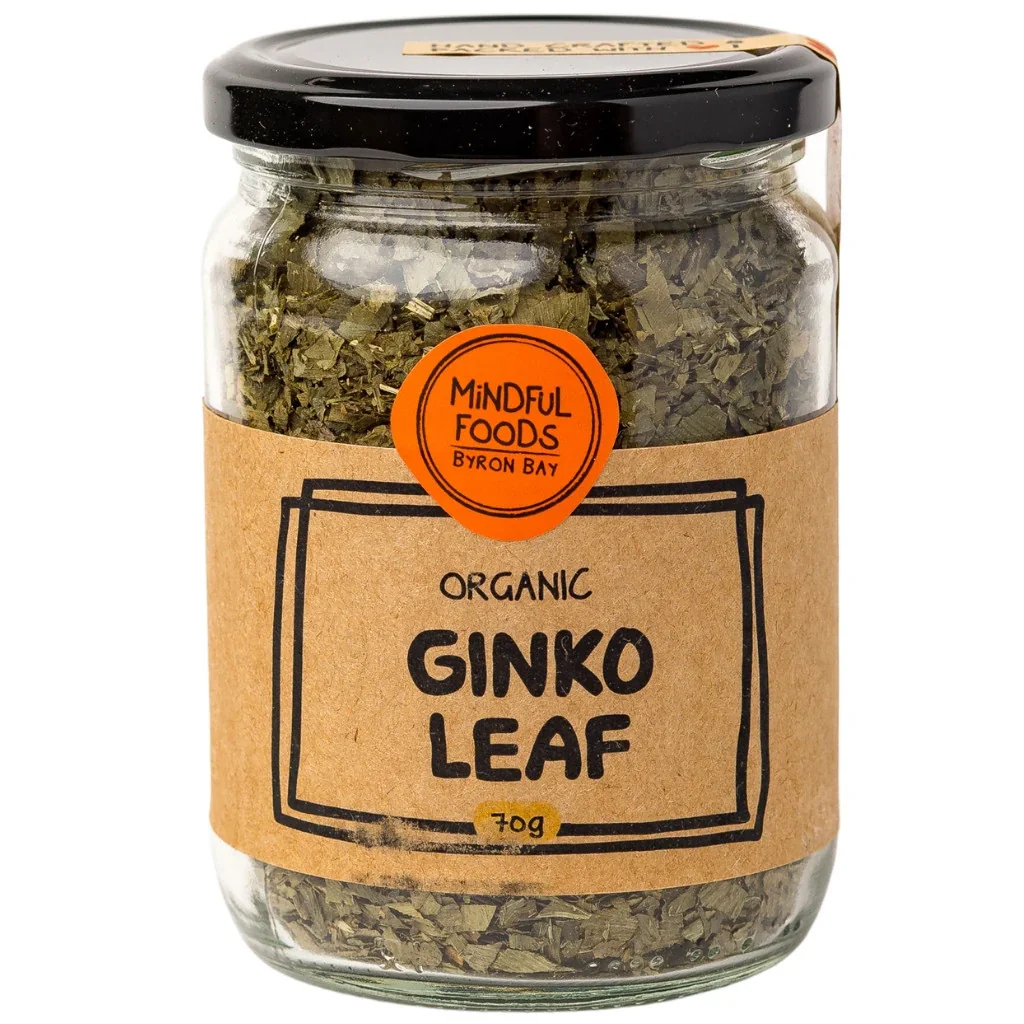
Mindful Foods Ginkgo Leaf 70g, For A Healthy Circulation & To Improve Concentration
Ginkgo, scientifically known as Ginkgo biloba, is a unique tree species that has been around for millions of years and is sometimes referred to as a "living fossil." It is the only living member of the division Ginkgophyta and is native to China. Ginkgo has a long history of use in traditional Chinese medicine, and its leaves and seeds are valued for their medicinal properties.
Here are some key aspects of ginkgo
Health Benefits: Ginkgo is primarily known for its potential health benefits, especially for cognitive function and circulation:
Cognitive Support: Ginkgo is commonly used to enhance memory, concentration, and overall cognitive function, particularly in elderly individuals.
Antioxidant Properties: It contains flavonoids and terpenoids, which have antioxidant effects that help protect cells from oxidative damage caused by free radicals.
Improving Blood Flow: Ginkgo is believed to improve circulation by dilating blood vessels, which may benefit conditions like intermittent claudication (painful leg cramps caused by reduced blood flow).
Anti-inflammatory Effects: It has anti-inflammatory properties that may be beneficial for various inflammatory conditions.
Forms of Consumption: Ginkgo is typically consumed in the following forms:
Extracts: Ginkgo leaf extracts are available in standardized forms, typically as capsules or tablets, which provide consistent dosages of active compounds.
Tea: Infusions made from ginkgo leaves can be consumed as herbal tea, although this is less common compared to standardized extracts.
Whole Leaf: Some preparations use dried ginkgo leaves, ground into a powder or used directly.
Safety and Considerations: Ginkgo is generally considered safe for most people when used appropriately and in recommended doses. However, it may interact with certain medications, particularly blood thinners like warfarin, and should be used cautiously in individuals with bleeding disorders or before surgery. Pregnant or breastfeeding women should avoid ginkgo due to potential risks.
Research and Modern Usage: Ginkgo has been extensively studied for its potential health benefits, especially in relation to cognitive decline, dementia (including Alzheimer's disease), and peripheral arterial disease. While some studies show promising results, others are inconclusive, and more research is needed to fully understand its effectiveness and mechanisms of action.
Quality and Sourcing: When purchasing ginkgo supplements, it's important to choose products from reputable manufacturers that use standardized extracts to ensure potency and quality. Look for products that indicate the percentage of flavonoids and terpenoids (typically 24% flavonoid glycosides and 6% terpene lactones).
Ingredients
Ginkgo Biloba Leaf.
Original: $15.99
-65%$15.99
$5.60Mindful Foods Ginkgo Leaf 70g, For A Healthy Circulation & To Improve Concentration
Ginkgo, scientifically known as Ginkgo biloba, is a unique tree species that has been around for millions of years and is sometimes referred to as a "living fossil." It is the only living member of the division Ginkgophyta and is native to China. Ginkgo has a long history of use in traditional Chinese medicine, and its leaves and seeds are valued for their medicinal properties.
Here are some key aspects of ginkgo
Health Benefits: Ginkgo is primarily known for its potential health benefits, especially for cognitive function and circulation:
Cognitive Support: Ginkgo is commonly used to enhance memory, concentration, and overall cognitive function, particularly in elderly individuals.
Antioxidant Properties: It contains flavonoids and terpenoids, which have antioxidant effects that help protect cells from oxidative damage caused by free radicals.
Improving Blood Flow: Ginkgo is believed to improve circulation by dilating blood vessels, which may benefit conditions like intermittent claudication (painful leg cramps caused by reduced blood flow).
Anti-inflammatory Effects: It has anti-inflammatory properties that may be beneficial for various inflammatory conditions.
Forms of Consumption: Ginkgo is typically consumed in the following forms:
Extracts: Ginkgo leaf extracts are available in standardized forms, typically as capsules or tablets, which provide consistent dosages of active compounds.
Tea: Infusions made from ginkgo leaves can be consumed as herbal tea, although this is less common compared to standardized extracts.
Whole Leaf: Some preparations use dried ginkgo leaves, ground into a powder or used directly.
Safety and Considerations: Ginkgo is generally considered safe for most people when used appropriately and in recommended doses. However, it may interact with certain medications, particularly blood thinners like warfarin, and should be used cautiously in individuals with bleeding disorders or before surgery. Pregnant or breastfeeding women should avoid ginkgo due to potential risks.
Research and Modern Usage: Ginkgo has been extensively studied for its potential health benefits, especially in relation to cognitive decline, dementia (including Alzheimer's disease), and peripheral arterial disease. While some studies show promising results, others are inconclusive, and more research is needed to fully understand its effectiveness and mechanisms of action.
Quality and Sourcing: When purchasing ginkgo supplements, it's important to choose products from reputable manufacturers that use standardized extracts to ensure potency and quality. Look for products that indicate the percentage of flavonoids and terpenoids (typically 24% flavonoid glycosides and 6% terpene lactones).
Ingredients
Ginkgo Biloba Leaf.
Product Information
Product Information
Shipping & Returns
Shipping & Returns
Description
Ginkgo, scientifically known as Ginkgo biloba, is a unique tree species that has been around for millions of years and is sometimes referred to as a "living fossil." It is the only living member of the division Ginkgophyta and is native to China. Ginkgo has a long history of use in traditional Chinese medicine, and its leaves and seeds are valued for their medicinal properties.
Here are some key aspects of ginkgo
Health Benefits: Ginkgo is primarily known for its potential health benefits, especially for cognitive function and circulation:
Cognitive Support: Ginkgo is commonly used to enhance memory, concentration, and overall cognitive function, particularly in elderly individuals.
Antioxidant Properties: It contains flavonoids and terpenoids, which have antioxidant effects that help protect cells from oxidative damage caused by free radicals.
Improving Blood Flow: Ginkgo is believed to improve circulation by dilating blood vessels, which may benefit conditions like intermittent claudication (painful leg cramps caused by reduced blood flow).
Anti-inflammatory Effects: It has anti-inflammatory properties that may be beneficial for various inflammatory conditions.
Forms of Consumption: Ginkgo is typically consumed in the following forms:
Extracts: Ginkgo leaf extracts are available in standardized forms, typically as capsules or tablets, which provide consistent dosages of active compounds.
Tea: Infusions made from ginkgo leaves can be consumed as herbal tea, although this is less common compared to standardized extracts.
Whole Leaf: Some preparations use dried ginkgo leaves, ground into a powder or used directly.
Safety and Considerations: Ginkgo is generally considered safe for most people when used appropriately and in recommended doses. However, it may interact with certain medications, particularly blood thinners like warfarin, and should be used cautiously in individuals with bleeding disorders or before surgery. Pregnant or breastfeeding women should avoid ginkgo due to potential risks.
Research and Modern Usage: Ginkgo has been extensively studied for its potential health benefits, especially in relation to cognitive decline, dementia (including Alzheimer's disease), and peripheral arterial disease. While some studies show promising results, others are inconclusive, and more research is needed to fully understand its effectiveness and mechanisms of action.
Quality and Sourcing: When purchasing ginkgo supplements, it's important to choose products from reputable manufacturers that use standardized extracts to ensure potency and quality. Look for products that indicate the percentage of flavonoids and terpenoids (typically 24% flavonoid glycosides and 6% terpene lactones).
Ingredients
Ginkgo Biloba Leaf.